

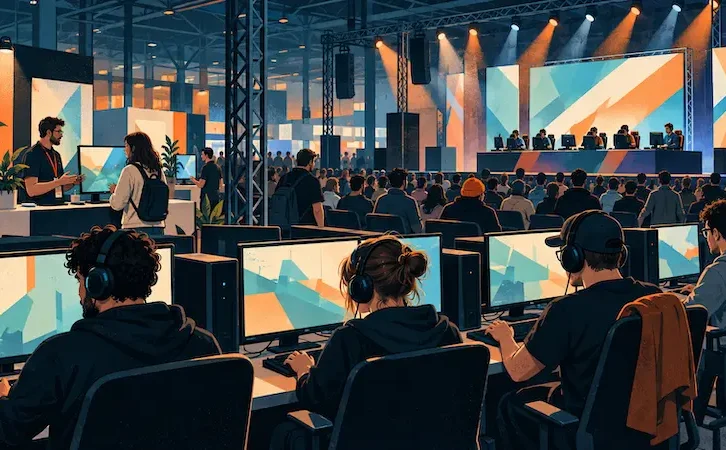
At DreamHack Birmingham on 27–29 March 2026, indie developers discussed their games at stands, technology companies demonstrated hardware, and spectators watched Call of Duty teams compete. One festival contained all these activities, each offering a different way to take part. The programme showed how far the event had travelled from its Swedish computer-gathering origins: organised competition was one part of a gathering that also brought developers and their audiences together.
Em Stonham’s account of the Birmingham show floor describes a conversation with a developer working on Chronicles Reborn, alongside demonstrations and creator-led shows. Her visit included conversations about development, time spent trying out equipment, and more. These encounters put the people making games and the people playing them within the same programme.
Esports has its own structure within this mixture. Teams compete in matches, and spectators follow a contest with a defined result. The 2025 Knockout series at DreamHack’s events gave that competitive strand a distinct tournament identity. Its competition record concerns those matches within the wider gathering. The arena supplies a clear focus for following organised play; the surrounding show floor accommodates people trying games or discussing how they were made. Competition gives part of the festival a shared focal point, alongside activities in which visitors take part directly.
The original computer gathering
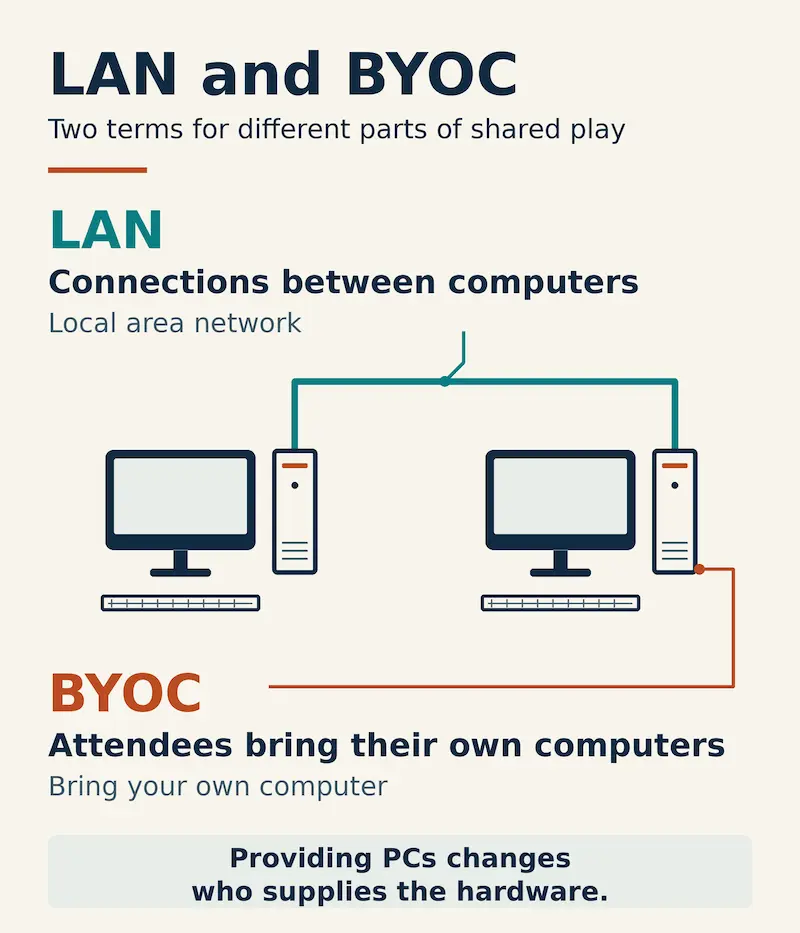
DreamHack’s May 2026 account of its history places its beginning in a school basement in Malung, Sweden, in 1994. Bringing computers became a defining tradition, known as BYOC, or bring your own computer. LAN means local area network: machines connected within a limited physical area. The equipment, connections, and people were assembled in one place.
BYOC gave attendees a practical role in assembling the event. Participants supplied the computers they played on, filling the venue with their individual setups. The organiser had to accommodate the hardware alongside its users. Bringing a computer therefore shaped both the attendees’ preparations and the space needed for the gathering.
The organiser’s retrospective describes successive emphases on gaming, esports, and creators. Each adds a different activity to the gathering. As the programme widened, bringing a computer became one way of participating in an event that also accommodated audiences and people presenting their work.
A programme with several centres
At Birmingham’s indie stands, Stonham spoke with a developer working on Chronicles Reborn and a marketing representative for NINE ROUNDS RAPID. Games were presented alongside people involved in making and promoting them. Conversation became part of the encounter with the work, alongside hands-on play. This brought development onto the show floor: people behind a project spoke about it directly, in the same venue where games were demonstrated, and competitions took place.
Hardware demonstrations extend the hands-on programme to equipment. In Birmingham, Stonham tried Samsung’s Galaxy XR headset for a virtual visit to the Metropolitan Museum of Art. Creator-led shows added another setting for gathering around gaming culture. The festival manages to offer all these activities simultaneously, ensuring there is something to attract everyone.
The international editions extend the gathering beyond Sweden. Stonham’s account places Birmingham alongside festivals in Atlanta and Stockholm, showing a format repeated in different cities. This geographic expansion sits alongside the widening programme. The first changes where people gather; the second changes the activities available once they arrive. Birmingham’s particular combination of indie stands, hardware demonstrations, creator shows, and an esports arena belongs to its March 2026 programme, rather than establishing an identical schedule for every edition.
Where esports fits
In Birmingham, Stonham reported being absorbed in the Call of Duty arena, despite an interest primarily in indie and horror games. Her account attributes that interest to the atmosphere of the live competition. It is one visitor’s experience, but it shows the movement possible within this particular programme: conversations on the show floor and time watching a match formed parts of the same visit. The arena gave spectators a shared contest to follow, with attention focused on the teams and the action. Elsewhere, the programme offered time with developers and games outside that competitive setting.
Shared play beyond BYOC
On 26 May 2026, DreamHack announced that it would end the BYOC component of its festivals and shift towards providing equipment through activities such as PC Freeplay. The organiser reported that attendees bringing their own computers represented less than 10% of its total ticket holders globally in 2025, alongside the increasing logistical complexity of operating large BYOC areas.
The figure describes a specific form of participation across the global ticket-holder total, rather than attendance at an individual festival. It does not establish how many visitors played games or watched matches. The organiser’s decision concerned the space and practical work devoted to attendees bringing their own equipment.
LAN and BYOC describe different arrangements. The first concerns connections between machines; the second concerns who supplies the hardware. With provided PCs, the equipment is already part of the venue’s offer. The announced shift would retain shared play while changing the preparations involved: transporting a personal computer would no longer be the defining condition of taking part in that activity.
That decision separates two things which had long been closely associated: gathering to play and transporting a personal computer to do it. DreamHack’s development now reaches into the participation model that gave the event its familiar shape. The announced move towards supplied equipment would keep playing together within the festival, while moving responsibility for bringing the computers from attendees to the organiser.