

When people discuss Britain’s technology success stories, the conversation usually gravitates towards the same places. Cambridge, Oxford and increasingly London. That’s understandable. The mistake is assuming the list ends there.
Britain’s innovation economy is much broader than many realise. World-class research, ambitious founders and deep technology businesses are emerging from Bristol, Southampton, Edinburgh, Manchester, Glasgow, Cardiff, Birmingham and many other parts of the country. The case for paying attention is not only national. Investors may be missing commercial opportunities because capital is still organised around the places it already knows.
In my experience, comparable deep-tech companies outside the golden triangle can face fewer bidders than similar companies in the densest clusters. That means that they may be seen by fewer investors and understood later than they should be. For investors able to do the work, that difference can matter.
Graphcore is a useful example. Built in Bristol around specialist semiconductor expertise, it demonstrated that globally significant deep-tech businesses can emerge outside of the UK’s best-known clusters. The lesson is that investors who look beyond familiar ecosystems may find opportunities that receive less attention than comparable businesses in more established hubs.
For years, debates about regional growth have focused on how to create innovation. Increasingly, that is the wrong question. Recent work by government on mapping the UK’s innovation clusters has reinforced what many founders and investors already know: innovation capability already exists across a much wider geography than most people assume. What matters now is whether capital can find those opportunities, assess them properly and back them for long enough to scale.
This isn’t simply a question of investor will. Sourcing and assessing companies outside dense clusters takes more time and attention, which naturally biases firms towards the places and networks they already know. Where local seed and angel capital is thin, good companies may never reach the stage that a national fund can underwrite. And the pressure to relocate often arrives later than people assume. It isn’t usually at founding. It’s more likely to come at Series B or Series C, when larger overseas investors lead rounds and the company’s centre of gravity begins to move.
Recent devolution reforms offer a useful contemporary reference point. They reflect a wider recognition that people closer to regional economies often understand local strengths, constraints and opportunities best. Innovation investment can benefit from the same principle, provided local knowledge is connected to capital that can apply rigorous national and global investment standards.
Universities are central to this. Over the last three decades, I’ve watched universities across the UK turn innovative research into companies which become magnets for investors, skilled workers and corporate partners. Apart from being educational institutions, they’re economic engines, generating talent, research and new companies in the regions around them.
Strong ecosystems matter commercially because deep-tech companies rarely scale in isolation. They need specialist talent, informed customers, patient capital and people who understand how to move from science to product, and product to market. When those ingredients are present in the same place over time, they reinforce one another. Companies can form, attract support and stay closer to the expertise that helped create them.
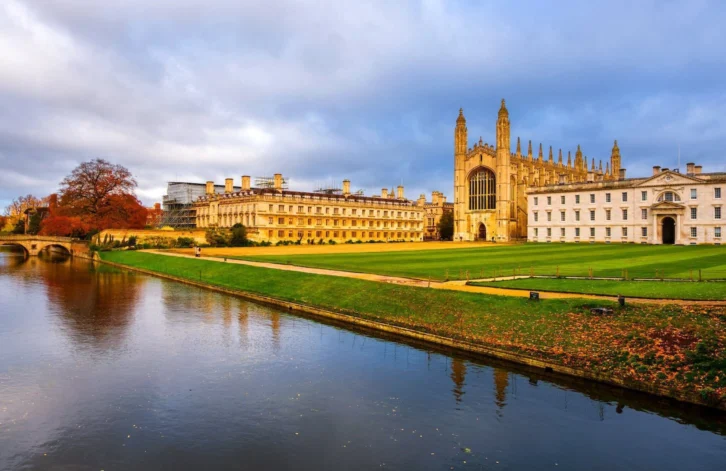
Cambridge is an important example, but not because every region should try to copy Cambridge. It is evidence of how compounding works over decades. Research produces founders, founders build companies, companies attract talent and capital, and each generation makes the next one more likely. The lesson isn’t to replicate the Cambridge phenomenon everywhere. It is to understand how different regional clusters can develop their own ecosystems and momentum.
Dundee’s games industry provides another example. Decades of investment in skills, research and entrepreneurship have created a globally recognised cluster built around local strengths, rather than attempting to imitate another ecosystem. The same principle applies across deep tech. Regions succeed when they build on the expertise and advantages that they already possess.
There has been a concerted effort to strengthen regional investment ecosystems through initiatives led by the British Business Bank and others. But the bigger challenge is often not creating more pools of capital. It’s creating promising companies so that the larger pools of capital can help them scale.
Many regional ecosystems already produce excellent science and engineering. What is often missing is the bridge between early research and institutional investment. This is where accelerators, venture-building programmes and entrepreneurial networks can play an important role.
Organisations such as DeepTech Labs have shown how specialist support can help founders translate world-class research into businesses that institutional investors can back with confidence. The goal should be to help them become investment-ready and connected to national and international capital as quickly as possible.
The Royal Academy of Engineering’s Enterprise Hub was an early and important example of this approach – but this is a drop in the ocean. A combination of the The Scale Up Institute and the NCUB could help to create such a network. Sole dedicated university funds are insufficient in regions where strong research clusters are developing but ‘expert’ capital is missing.
What matters now is whether ambitious founders can access the expertise, networks and investment required to grow without feeling they need to leave their ecosystem to succeed.
None of this requires every region to look the same. Different places will have different strengths. The opportunity is to recognise those strengths early, connect them to capital that can underwrite them properly and help more companies grow where they begin.
Cambridge and Oxford are examples, not exceptions. The UK’s innovation future will be shaped by a network of universities, founders, investors and companies spread across the country. The challenge is making sure we can recognise innovation, back it, and scale it wherever it emerges.