

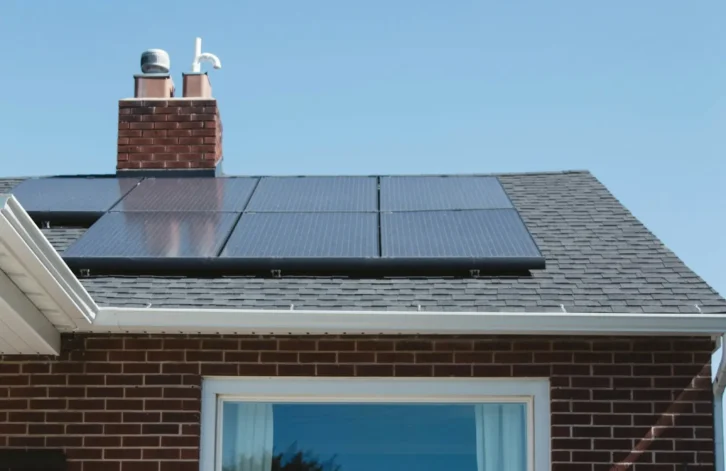
Bolt-on solar panels add weight, wind load and maintenance headaches to a roof that was never designed to carry them. The Metrotile eQube builds 67-watt photovoltaic tiles straight into a lightweight steel roofing system weighing just 8 kg per square metre, so your home generates its own power without punishing the rafters. Around 25 m² of eQube tiles can cover the electricity needs of an average UK household.
The Evolution of Energy Saving Roof Solutions
I have spent over 15 years installing lightweight metal roofing on UK homes, and the biggest change in that time is what homeowners now expect a roof to do. Ten years ago you wanted a roof to keep the rain out. Today you want it to cut your electricity bill as well.
The regulations have caught up with that expectation. From 2025, the Future Homes Standard requires most new homes in England to include renewable energy sources such as solar panels or heat pumps. That single rule has pushed solar roof tiles from a niche product into a mainstream specification item for developers and self-builders across the country.
The question is no longer whether to add solar. The question is how to add it without compromising the structure underneath.
The Limits of On Roof Mounted Solar Panels
Conventional PV panels bolt onto brackets above your existing tiles. Every bracket is a penetration through the weatherproof layer, and every penetration is a future leak risk that I have been called out to fix more times than I can count.
The raised gap between panel and tile creates two further problems. Wind gets underneath the array and works the fixings loose over years of gusting, which matters in exposed coastal areas of the UK. Pigeons also nest in that warm gap, and their droppings coat the glass until output drops and you pay someone to clean it.
Aesthetic and Structural Downsides of Heavy Solar Mounts
A standard panel array with mounting rails adds roughly 20 kg per square metre on top of your roof covering. If that covering is concrete or clay tile at 40 to 50 kg/m², you are asking a timber frame to hold up to 70 kg on every square metre before a single flake of snow lands.
On older properties with undersized rafters, that combination forces you into structural reinforcement work that can cost thousands before the first panel goes up. The visual result rarely justifies the expense either, since raised panels sit proud of the roofline like an afterthought.
Transforming Your Roof into a Power Generator with eQube
The eQube takes a different route. Instead of mounting solar hardware above the roof, Metrotile pressed monocrystalline PV cells into the same profile as its proven Qube lightweight steel tile. The solar tile becomes the roof covering itself.
Each eQube tile measures 1260 x 320 mm, weighs 3.1 kg and produces up to 67 watts. A double-insulated MC4 connector cable sits on the rear of every tile, so the system connects plug-and-play as the roofers work along the battens. No separate solar installation crew, no mounting frames, no brackets through the weatherproofing.
Seamless Design Integration of Solar Technology
Because eQube matches the exact Qube profile, it fits in line with the surrounding tiles and adds no extra height to the roofline. From the street, the array reads as part of the roof rather than equipment strapped to it. That low profile matters in planning-sensitive areas where councils reject raised panel arrays on visual grounds.
The tiles install from a minimum pitch of 15 degrees and can run up to vertical, which opens up wall cladding and steep gable installations that conventional arrays cannot touch.
Lightweight Durability Combined with High Energy Output
The complete eQube system weighs around 8 kg/m². Compare that with the 60 to 70 kg/m² of concrete tile plus panels and you can see why I specify it on renovation projects with older timber frames. The structure that struggled under concrete tile alone carries a power-generating steel roof with capacity to spare.
The coated steel casing shrugs off hail, ultraviolet exposure and storm-force winds, and the steel itself is 100% recyclable at the end of its service life. Metrotile backs the tile with a 10-year product warranty plus a 25-year installation and performance warranty.
Comparative Performance of Integrated vs Conventional Solar Systems
| Parameter | eQube on Metrotile steel roof | Panels over concrete tile | Panels over clay tile |
|---|---|---|---|
| Total roof load | ~8 kg/m² | 60 to 70 kg/m² | 55 to 65 kg/m² |
| Structural reinforcement on older frames | Not required | Often required | Often required |
| Installation trades needed | One roofing crew | Roofers plus solar installers | Roofers plus solar installers |
| Penetrations through weatherproof layer | None | Multiple bracket fixings | Multiple bracket fixings |
| Wind uplift risk | Minimal, tiles interlock in-line | Elevated, wind loads raised frames | Elevated, wind loads raised frames |
| Bird nesting under array | Impossible, no gap | Common | Common |
| Warranty cover | 10-year product, 25-year performance | Varies by panel brand | Varies by panel brand |
Read the table from a contractor’s point of view and one line stands out. Every trade you remove from a project removes a scheduling risk, a mark-up and a point of failure.
Financial and Environmental Return on Investment
A 4 kWh solar system in the UK costs between £5,000 and £6,000 in materials, with typical payback through energy savings landing at 8 to 10 years. With around 40% of UK adults now struggling to pay energy bills, that payback window is shortening as grid prices climb.
The eQube changes the calculation in your favour because you are buying a roof and a power plant in one purchase. On a re-roof or new build, the marginal cost of choosing eQube over a standard covering plus separate panels is far smaller than the sticker prices suggest.
Slashing Monthly Utility Bills with Solar Innovation
Roughly 25 m² of eQube tiles generates enough electricity to run an average UK home. Pair the array with an inverter and battery storage and you draw from your own roof through the evening peak, when grid rates hit their highest.
Self-cleaning tile surfaces keep output steady without the panel-washing bills that raised arrays rack up. Less maintenance means the savings stay in your pocket rather than going to a cleaning contractor twice a year.
Boosting Property Resale Value with Sustainable Upgrades
Surveyors and buyers now check EPC ratings before they check the kitchen. A home that generates its own electricity with no visible bolt-on hardware presents better in photographs, values higher on paper and sells to a market that increasingly prices energy costs into every offer.
You are not just cutting bills. You are banking the upgrade into the asset itself.
Perfect Architecture Compatibility for Modern Homes
The eQube already powers the Vistry Innovation Centre, the flagship net-zero housing facility of one of the UK’s largest developers, where it was selected as the integrated solar roof option of the future. Modular builds, residential estates and commercial units all run the same tile because the Qube profile suits contemporary and traditional elevations alike.
Blending Aesthetics with High Performance Energy Generation
Architects choose eQube because it solves the oldest conflict in solar design, the trade-off between output and appearance. Monocrystalline cells deliver high-efficiency generation while the pressed steel profile keeps clean, crisp lines across the entire roof plane.
Extensions and garden rooms benefit too. The low system weight suits the modest timber structures these projects use, and the in-line finish keeps the new roof consistent with the main house.
Embracing Eco Friendly Roofing Solutions for a Greener Tomorrow
Every eQube roof cuts a household’s grid demand for 25 years or more, and the steel that makes it goes back into the recycling stream afterwards. The light weight also trims the carbon cost of the project itself, since one lorry delivers several times more roof coverage than a load of concrete tile.
If you are planning a re-roof, an extension or a new build, get the roof working for the building instead of just sitting on it. Request a free estimate from Metrotile, and their technical team will handle the solar array planning, quantity take-offs and specification writing for your project.
Photo by Vivint Solar on Unsplash