

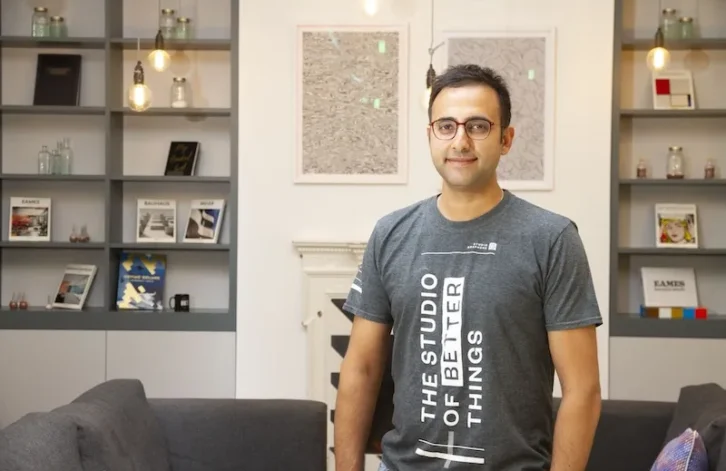
by Ritam Gandhi, founder and director of Studio Graphene
What does an Anthropic IPO tell us about the AI market?
One of the main reasons for pursuing an IPO is to raise capital in the public markets. So, one thing it tells us is that Anthropic is capital-hungry. If it didn’t need significant capital, it wouldn’t necessarily be pursuing an IPO.
The other side of that is that they clearly see an appetite in the public markets to invest at a certain valuation. There’s been a lot of discussion about where to price the IPO, but increasingly the conversation is that it’s being priced fairly rather than exuberantly.
The speed at which Anthropic has got here is extraordinary. It could be one of the fastest IPOs at this scale in history. The company didn’t exist six years ago and is now potentially on its way to becoming one of the world’s largest companies.
Compare that with SpaceX, which has been around for 25 years. Anthropic has reached this point in just six.
It also makes you wonder what other disruption might be coming. What if, in another six years, we’re talking about a completely different company that has overtaken Anthropic? Things are moving so quickly that it’s difficult to predict where the market will be.
Is the AI market in a bubble?
I don’t think Anthropic itself is in a bubble. They’ve released an S-1 showing very strong gross margins and extraordinary quarter-on-quarter growth. The underlying business fundamentals look strong.
For the wider AI market, there’s still a lot of uncertainty about how much demand there will ultimately be. IPO valuations and investment decisions are based on projected future demand, and we’re seeing enormous sums going into building compute capacity. The question is whether that demand will justify the scale of investment being made in the infrastructure.
Equally, what happens if demand for compute ends up exceeding the capacity being built?
I’d say Anthropic’s valuation looks justified based on its fundamentals today. But with the pace of disruption we’re seeing, we don’t know whether that will still be the case at another point in time.
Have expectations around AI got ahead of what the technology can deliver?
I think the technology is already capable of a great deal. What we don’t yet know is what adoption will look like, particularly when it comes to how much people are actually prepared to pay for it.
The vast majority of ChatGPT and Claude users are on free tiers. We still don’t know how many of those users will be willing to pay, or whether open-source models will become just as capable, allowing people to run them locally.
What does the IPO mean for the wider AI industry and its competitors?
I think the success of the IPO will be an important indicator of whether appetite for AI investment is still there. Will Anthropic be able to comfortably raise the capital it wants? It will be a good test of how much appetite there is in the public markets for investing in AI.
The fact that Anthropic appears to be getting to an IPO ahead of OpenAI is also interesting. It will set a benchmark for OpenAI in terms of how the market values a business with similar metrics.
I don’t necessarily think there’s a shortage of investment capital in the AI market at the moment. There’s enough money to go around, particularly as companies aren’t necessarily trying to raise extraordinary amounts through each individual investment.
However, there is also a lending component to consider. We’re seeing significant borrowing to fund AI infrastructure and compute. That could create constraints for other businesses looking to borrow, particularly if lending capacity is increasingly directed towards AI.
What does this mean for smaller AI companies and implementation partners?
I think one of the interesting things happening alongside the IPO is Anthropic’s growing emphasis on partnerships.
They’re recognising that they need other companies to help deploy their models within businesses, so that organisations can actually use them and see a return on investment.
I think that’s positive for businesses like ours. There’s a lot of work involved in getting these models into organisations and making them commercially useful, and Anthropic clearly recognises that it needs partners to help customers do that.
What are the biggest challenges facing Anthropic as a public company?
I think they’ll face a lot more scrutiny. They’ve moved at an incredible pace, and I wonder whether becoming publicly listed will introduce additional compliance requirements that could slow them down.
There will also be greater expectations around financial performance. As a publicly listed business, delivering against financial targets will become increasingly important.
I think there’s a balance to strike between continuing to invest in long-term AI research and meeting the expectations of public market investors.
On the infrastructure side, they already have strong gross margins, but maintaining profitability will depend on having enough compute capacity to run their models and sufficient demand from customers. They’ll also need consultants and implementation partners to help generate enterprise demand and get those models adopted within businesses.
What should businesses take away from the IPO?
I don’t think the IPO itself necessarily changes anything for businesses adopting AI.
There’s a wider shift happening in the market, though. The era of revenue at any cost is changing, and there’s an increasing focus on profitability.
For businesses investing in AI, that reinforces the need to understand what they’re getting out of it commercially. There’s little sense in adopting technology simply because it’s available, particularly when companies are becoming more concerned about the returns on their investments.
Where will the value in AI ultimately sit?
I think we’re going to see greater differentiation between the companies developing foundational AI models and those building commercially useful products around them.
If foundational models are becoming increasingly comparable in capability, with multiple providers and open-source alternatives available, having the best model is no longer necessarily the biggest differentiator.
I think the products and applications built around AI will ultimately hold the greatest long-term value. Look at Anthropic itself. Alongside developing the underlying models, it has built Claude into a product that people actually use, and that’s a big part of the business’s success.