
Milton Keynes Tech Week is back for its second year. Kicking off on 12th October, thousands are expected to attend over 40 events hosted by businesses and sponsors throughout the city, including a range of panels, workshops, demos and networking sessions to build new connections across business, research and government.
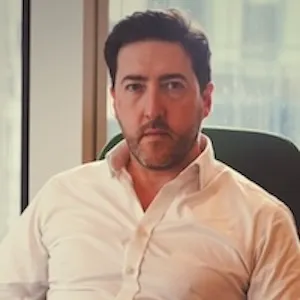
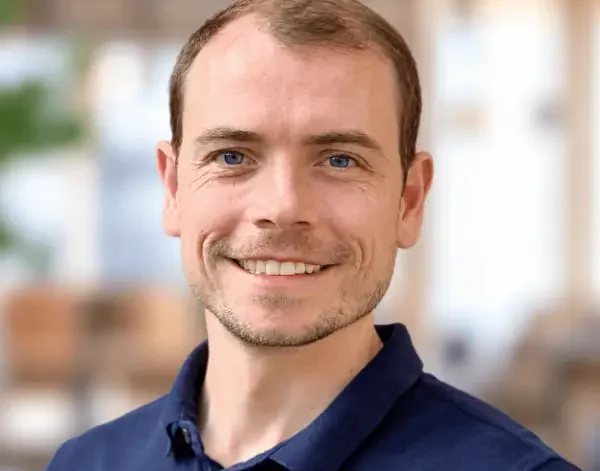
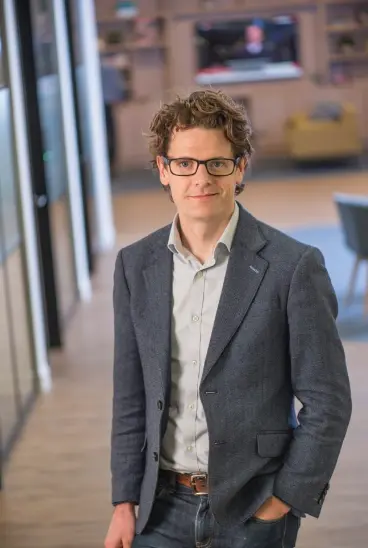
Speaking to UKTN, Michael Pattinson, Chief Innovation Officer and Oliver Waters, Co-founder & Director at Protospace, the community interest company behind the event, discussed their ambitions for the week, what visitors can expect and the unique role Milton Keynes will play in the UK’s tech future.
- Why has Milton Keynes Tech Week come back for a second year, what’s the ambition behind it, and what do you want the event to achieve this year?
Oliver: Our ambition with the first event last year was to communicate and celebrate the city’s strengths, position and potential in technology and innovation nationally, whilst bringing our local community together with those from beyond the city and region. As a founder myself, I appreciate the importance of being surrounded by an active and supportive ecosystem that propels home-grown startups beyond the city’s borders.
Michael: The honest answer to why we’re back is that the community asked us to return. Last year we supported the City Council to deliver the first Tech Week, which was a big success and more than 23,000 people came to over 30 events.
This year, Protospace is hosting, and the biggest difference is that we’re trying to also attract people from outside the city. It’s bigger and more varied than last year too, which is very exciting.
We have set the stage for a national conversation with our Sovereign Technology conference on 15 October, putting Milton Keynes at the centre of a discussion that matters to the whole country.
- What makes Milton Keynes a particularly strong location for a technology and innovation festival of this kind?
Michael: I think Milton Keynes is often a victim of an unfair reputation… people tend to think about concrete cows and roundabouts and the tech scene here doesn’t get as much attention as it should. But within the city there are around two and a half thousand tech businesses and about 45,000 people already working in the sector. And the city is also home to multiple global brands including Red Bull Racing, Santander, Network Rail, Volkswagen Group and Scania, all of which have significant operations here, alongside The Open University, MK:U and Milton Keynes College.
Oliver: The heritage of the city also speaks volumes, with Bletchley Park on our doorstep, and HMGCC close by. Innovation is in the fabric of the city, and for a focus this year on sovereign technology, there’s nowhere more fitting.
Coupled with that, as a purpose built ‘new town’ testing new things is in the city’s DNA, and the community embraces innovation and technology. We’ve also got the benefit of having the space to test technologies at scale, unlike, older, denser towns and cities. We’re a city that’s a test-bed for innovation, comfortable with trying new things in public, from delivery robots on the pavements and autonomous vehicle trials on the roads. We describe it as a city-sized playground for curious minds.
Geographically, of course, we’re uniquely placed in the middle of London and Birmingham, but also Oxford and Cambridge, and well connected by transport routes to Oxford, Milton Keynes, Bedford, Cambridge, London and Manchester. This enables us to connect talent, investors, research facilities and commercial markets.
Earlier this year, an Open University-led partnership backed by £20million of government funding was announced to drive innovation across the Oxford-Cambridge corridor including Milton Keynes, so there’s a lot of potential in the area.
- Milton Keynes sits at the heart of the Oxford-Cambridge Growth Corridor. What role do you think the city can play within that wider innovation ecosystem?
Oliver: Oxford and Cambridge are exceptional at discovery. Milton Keynes is strong at what comes next – getting new technology out of the lab and into use. The corridor needs both. So, Oxford and Cambridge invent it, Milton Keynes tests it and puts it on real streets with real users.
We have space to build and test, a workforce with real engineering and operational depth, and a cluster of large organisations that can act as early customers for new technology. For founders, this is key. The challenge isn’t necessarily getting the idea or the prototype; it’s having a team that can grow it into a business with paying customers. Milton Keynes is a great place to make that jump.
Michael: The supercluster needs somewhere in the unglamorous middle part; taking ideas from the pilot stage and making it work. It’s this role that has put Milton Keynes at the forefront of robotics and autonomous vehicles; we’re in the top 10% of local authorities outside London for connected and autonomous systems, for example.
We’re also very lucky to have a forward-thinking council that is happy to try new things and think differently. Robopass, the city council’s new national licensing framework, which oversees and assures safe robotic and autonomous deployments, such as delivery bots, drones, and self-driving vehicles, in open public spaces is a great example of that.
- This year’s programme spans areas including AI, robotics, autonomous vehicles, advanced manufacturing, skills and entrepreneurship. What does that breadth tell us about the technology ecosystem developing in Milton Keynes?
Oliver: Milton Keynes is where digital meets the physical world. Our strengths aren’t in one vertical, they’re in the places where AI, engineering, and operations overlap: robots that deliver groceries, vehicles that navigate real roads, and high-performance engineering that’s come out of the motorsport cluster around us.
That’s what our strapline, “Where next is now”, is about. A lot of what people think of as the future is already being tried out here, and Tech Week is a chance for the city, its businesses and its people to shape what comes next.
- The flagship conference is focused on “Sovereign Technology”. Why did you choose that theme, and why is it particularly relevant to UK businesses and policymakers now?
Michael: Sovereign technology is about how the UK develops, secures, and controls the critical technologies, data, and infrastructure that our economy and security depend on. It relates to the awkward questions that are asked around the use of tech: Who owns it? Where does that data go? Can we trust the technology that we now depend on? Is it safe, reliable, resilient?
These questions are commercial, as well as policy-led, and the last couple of years have shown how quickly access to foreign-owned tools, supply chains, and compute can change for reasons entirely outside a UK company’s control. For most businesses, that’s about resilience: can you keep operating if a platform, a supplier or a service changes overnight?
Oliver: The ‘sovereign technology’ theme also plays to the city’s strengths. Bletchley Park is where some of the UK’s most important sovereign capability was first built, and HMGCC carries on that work close by today. BSI, which sets many of the standards UK industry works to, is headquartered here too.
At the flagship conference, hosted by BBC Technology Editor Zoe Kleinman, we’ll be looking into all of these big questions around the topic.
- Beyond attracting people to the events themselves, what would a successful Milton Keynes Tech Week look like for the city six or twelve months from now?
Michael: Making connections is really important. The aim of Milton Keynes Tech Week is to bring the relevant groups of people together: founders, corporates, investors, councils, researchers, because when you bring all those people together that’s when tangible progress is made. A corporate finds a supplier they’d never heard of, a college hears from employers what they need; those are the conversations we want to start. It’s those conversations that drive growth and help to build our thriving ecosystem, and then in turn grow Milton Keynes’ global identity for doing things differently.
So, in 6 to 12 months, we’d like to be judged on what’s changed since the event and how those connections have developed. For example, corporates running innovation challenges with local startups, innovation circuit projects with businesses, and perhaps most importantly, people who maybe only came to the city for the conference are coming back to visit. And, of course, we want to make every year bigger and better.
Oliver: We’d like Milton Keynes to be better understood as a place where technology and innovation are tested and deployed. We’d really like our strapline, “Where next is now”, to become part of the city’s brand.
- For someone in the UK technology sector who has never been to Milton Keynes Tech Week before, what do want them to take from it?
Oliver: Simply put, I’d say ‘access’ – access to technology, businesses, investors and policymakers from across the UK. On 15 October at Unity Place, hosted by the BBC’s Zoe Kleinman, attendees will be in a room with government, national security, standards bodies, universities, investors, and founders, discussing one of the most important questions facing UK technology right now.
They’ll also see technology in practice. Milton Keynes is a city where a lot of innovative tech already in use on the streets.
Michael: I also want people to feel that this is a community-backed event and that they are part of that that community, rather than just attending a conference.
With such a wide range of events happening, people have the opportunity to build their own week and focus on what interests them. There’s an amazing breadth of innovation to come and see.
And of course, we want people to come and enjoy our city, and potentially leave with a different view of the city and the growth corridor. If you’ve only thought of it as Oxford and Cambridge, come and see what sits in between.