

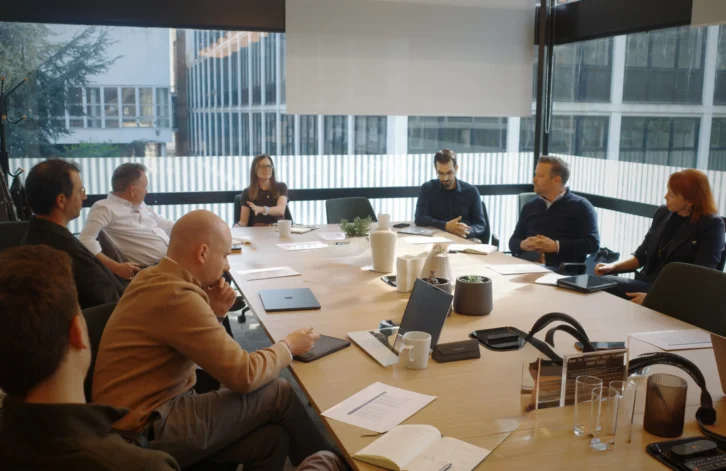
At an April roundtable hosted by Lloyds in partnership with UKTN, founders, investors, academics and bankers gathered at Sister, Manchester’s leading innovation district, to take stock of a system that produces world-class research but still struggles to scale.
On paper, the landscape looks healthy.
The UK spinout ecosystem is turning out globally competitive research, and there is no shortage of ideas coming out of universities.
The problem is what happens next. It did not take long for the conversation to land on a familiar pattern: the front-end works, but the middle is where progress halts.
Gareth Llewellyn, investment director at Northern Gritstone, pointed to the strength of the UK’s research base, describing it as “one of our biggest national assets”, but said there is still a gap at the point where a company first spins out.
The challenges of navigating the post-spinout phase before being ready to raise capital are well documented.
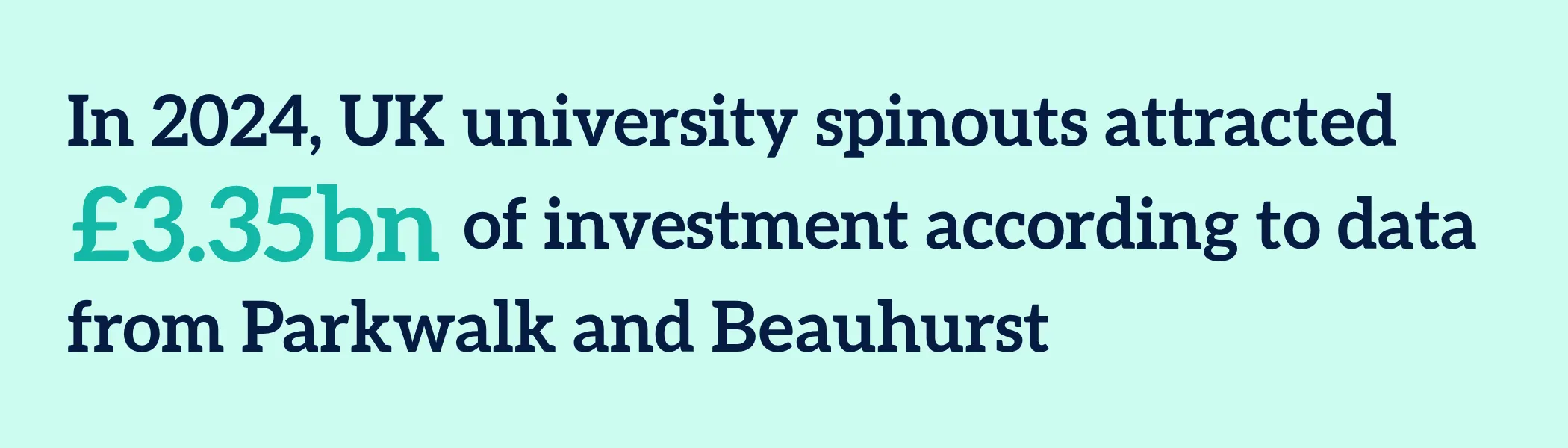
According to recent data from specialist investor Parkwalk and data intelligence platform Beauhurst, UK university spinouts have attracted billions in investment in recent years, including a record £3.35 billion in 2024 alone, yet most remain at seed stage.
Investors want revenue, customers, or at least a clear path to both.
“That gap is something that we have still not fully found a solution for,” Llewellyn added.

Professor Chris White, chief advisor at the Manufacturing Technology Centre, described the difficult stretch between a strong idea and industrialising it, where spinouts are rarely prepared for everything that follows, from supply chains and finance to building a team.
“We call it the ‘valley of death’ between that great idea and industrialising that idea,” he said.
For founders, that gap is not theoretical. Dr Martin Fergie, co-founder and chief technology officer at Spotlight Pathology, described a path familiar to many. Early grants, proof-of-concept funding, more grants, early investment, regulatory hurdles, and, finally, a first customer.
“Getting those first cheques in has been a challenge for us,” he said.
“Talent is a critical ingredient for a spin-out to be successful”
For others, the constraint is less about capital and more about capacity.
Panos Papadopoulos is earlier in the scaling journey with his spinout business, Grid Stability, but is facing a similar bottleneck. “The biggest challenge is the lack of time,” he said, pointing to the difficulty of building a company alongside an academic role.
That is something universities are acutely aware of.
Dr Catherine Headley, chief executive of the University of Manchester’s Innovation Factory, described the question of when to spin out as a constant balancing act. “You have to work out where the sweet spot is,” she said.
What has shifted is a growing recognition that funding alone will not fix the problem. “We recognise that talent is a critical ingredient for a spin-out to be successful,” Headley added. Universities are increasingly trying to address gaps in leadership and commercial experience before companies step into the market.
That point was echoed from the banking side. Sam Baldwin, who leads technology and innovation sector strategy for Lloyds’ commercial bank, said the issue is not just capital but a “business commercial readiness gap”.
“The challenge comes when an innovative idea suddenly becomes a business. There are so many factors to consider,” he said.
Taking the next step
That shift from researcher to operator is one of the hardest parts of the spinout journey.
Fergie described stepping back from the CEO role as a pragmatic decision, allowing him to focus on product and technology while bringing in leadership that had extensive experience of scaling a company.
“I did a good job of learning about investment and commercial business planning strategy, but I was at a point where I was being torn between two avenues and I decided to go with my strengths,” he said.
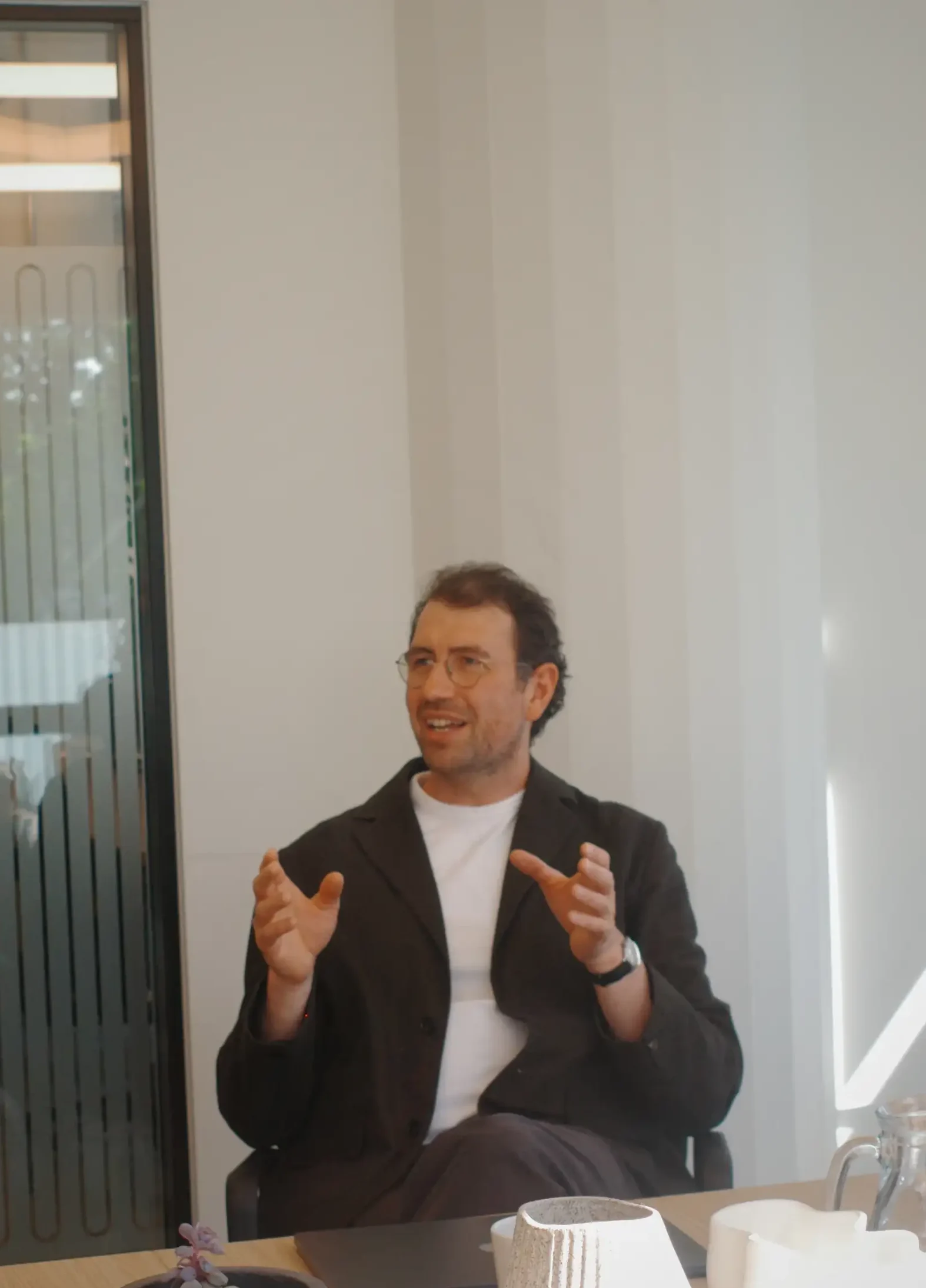
For investors, scaling experience matters. Llewellyn explained that the science is often strong, but the teams built around it are not always complete. Strengthening those teams can reduce risk, but attracting that talent remains difficult.
Geography also plays a role. There was a growing sense that regional ecosystems are maturing, with stronger talent pools and more companies emerging in clusters such as Manchester, Liverpool and Cheshire.
Dr Kath Mackay, chief scientific officer at Bruntwood SciTech, said the region has seen a clear inflection point in recent years, but acknowledged a gap in experience.
“We are limited by […] the number of serial entrepreneurs who have created a company, grown and exited a company and then jumped back in again,” she said.
“Regional ecosystems are maturing, with stronger talent pools and more companies emerging in clusters such as Manchester, Liverpool and Cheshire”
That flow of talent is what helps more mature ecosystems move faster. Innovation districts such as Sister intend to create a complete ecosystem by placing university resource, startups, corporates and investors in one location.
For large companies, this means access to top talent and new technology and for startups, it provides the opportunity to be closer to capital and experience.
There is also a practical side. Attracting senior hires often requires relocation, and without a wider ecosystem, that can appear to be a one-way risk. A denser cluster makes that decision easier.
The search for a solution
While there was recognition that regional leadership in the North West seems engaged, there was also a sense that national strategy has yet to fully match the importance of spinouts as a driver of growth. As White put it, if the aim is to create business and jobs, this is “quite a good way of doing it”.
However, proposals to tie companies to regions or force reinvestment locally were met with caution. “Any kind of encumbrance like that is […] not seen positively by investors,” Fergie said.
This point was bolstered by Bruntwood SciTech’s Kath Mackay, who agreed that imposing a levy to keep companies active to a particular region could act as a deterrent rather than an incentive.
Instead, focus returned to building the conditions that make staying and scaling in the UK viable. That includes access to capital, but also talent, infrastructure, and a clear pathway from early-stage funding through to later rounds.
Spencer Rhodes, a relationship director at Lloyds working with technology businesses in the North West region, emphasised the importance of early decisions. “Deciding who you are going to partner with on day one is a pivotal moment,” he said.
“Whether those partners are investors, advisors or bankers, the support they offer can be critical at all stages of the journey, and making sound choices early in the process can make navigating the challenges of growth that bit smoother.”
There is no single fix. When asked what one change would improve outcomes, the answers pointed to a mix of factors rather than a silver bullet. Speakers raised the notions of increased capital, more experienced operators, stronger networks, and better alignment between the different parts of the system.
If there was a consensus, it was this: the UK is good at generating ideas. Turning them into companies that scale is the biggest challenge.