

The Northern tech ecosystem has spent the past decade proving it can grow without the level of investment or attention enjoyed by London and the South East.
The question now is whether the rest of the system is ready to catch up.
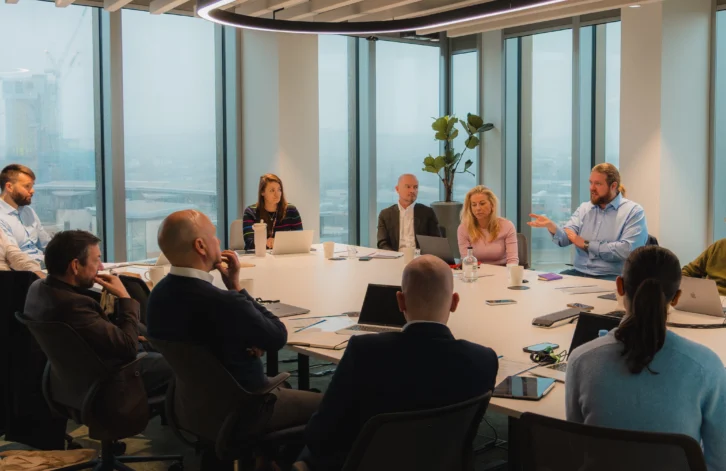
That theme ran through a roundtable discussion hosted by Lloyds in partnership with UKTN which explored the Northern tech scene.
Investors, founders, university leaders and ecosystem builders came together to examine how innovation outside the UK capital is evolving – and why it still struggles to command the same national and international recognition.

There was no question that the North boasts excellent talent and innovative ideas. Across Leeds, Manchester, Sheffield, Newcastle and other hubs, there is now a dense patchwork of firms in advanced manufacturing, robotics, semiconductors, AI and data-led businesses.
The talking point was that this growth has occurred despite flawed transport links and uneven infrastructure, rather than being supported by them.
“We’ve achieved high-level growth in the North despite the economic environment and significant underinvestment compared to the rest of the greater South,” said Alex Craven, CEO of The Data City.
“If we received the same level of investment, we believe we would punch pound-for-pound above the South.”
Collaboration has fueled this progression. Several speakers pointed to informal cooperation between cities, universities and local networks as one of the North’s real strengths.
When money is tight, ideas and people tend to move instead, and that has helped tech scenes across the region grow faster than many expected.
Natalie Boswell, corporate director at Lloyds said that collaborative instinct is rooted in the North’s economic makeup and history.
“We hear that a lot when we are reviewing research,” she said, pointing to the way regions such as West Yorkshire reflect the country’s wider demographics, working patterns and industrial mix.”

Boswell also highlighted the cultural dimension that underpins that cooperation. “If you look at the history of the north of the region, it is very industrialised and heavily focused on grafting,” she added. “I think that is an attitude that continues today.”
That mentality makes it easier for businesses and investors to work together according to Boswell, particularly when resources are constrained. “It is easy to get the right people in the room to see what is possible to do, even with limited resources,” she said.
The scaling conundrum
Despite some progress, the roundtable repeatedly returned to the issue of capital – particularly the difficulty of scaling Northern tech companies without relocating.
Early-stage activity is solid, but the problems often start later in the growth journey.
Several speakers agreed that once companies try to scale, the money remains overwhelmingly concentrated in London, pushing founders either to sell sooner than they’d like or to relocate to London.
Stuart Clarke MBE, founder of Leeds Digital and UK Tech Week, said that reality has forced Northern tech hubs to lean more heavily on each other.
“We haven’t got as much money as London nor have we got as many investors,” he said. “How can we all help each other to achieve the same success?”
“We’ve achieved high-level growth in the North despite the economic environment and significant underinvestment”
Steve Harris, head of the tech sector at Lloyds, framed the challenge as one of access rather than distance.
“We are only two hours from a global city,” he said, arguing that the real issue is how effectively regional ecosystems help early-stage businesses build a network beyond their immediate geography.
“How do we, as the ecosystem, help startups to build those connections?” he asked.
He suggested that better coordination could reduce friction for founders trying to raise capital or find strategic partners.
“If you are a fintech startup, rather than spending six months trying to work out who might fund you, we [Lloyds] already have those connections,” Harris added.
Sarah Tulip, chief operating officer of MetroTech and founder of community-led initiative WILD Digital, added that founders often face cultural as well as financial barriers when trying to scale.
“You are constrained by your environment and region,” she said.
“No-one is raising £50 or £100 million so there is no one to use as a role model. There are so many obstacles before you get there that tell you it is not possible.”
Encouraging talent
Universities in the region were one of the few areas where delegates agreed that progress was moving in the right direction.
Several speakers said institutions that once guarded their own patch are now working together more closely, particularly around spinouts, commercialisation, and talent.
These cross-regional partnerships intend to speed up early-stage work while giving companies more reason to stay put.
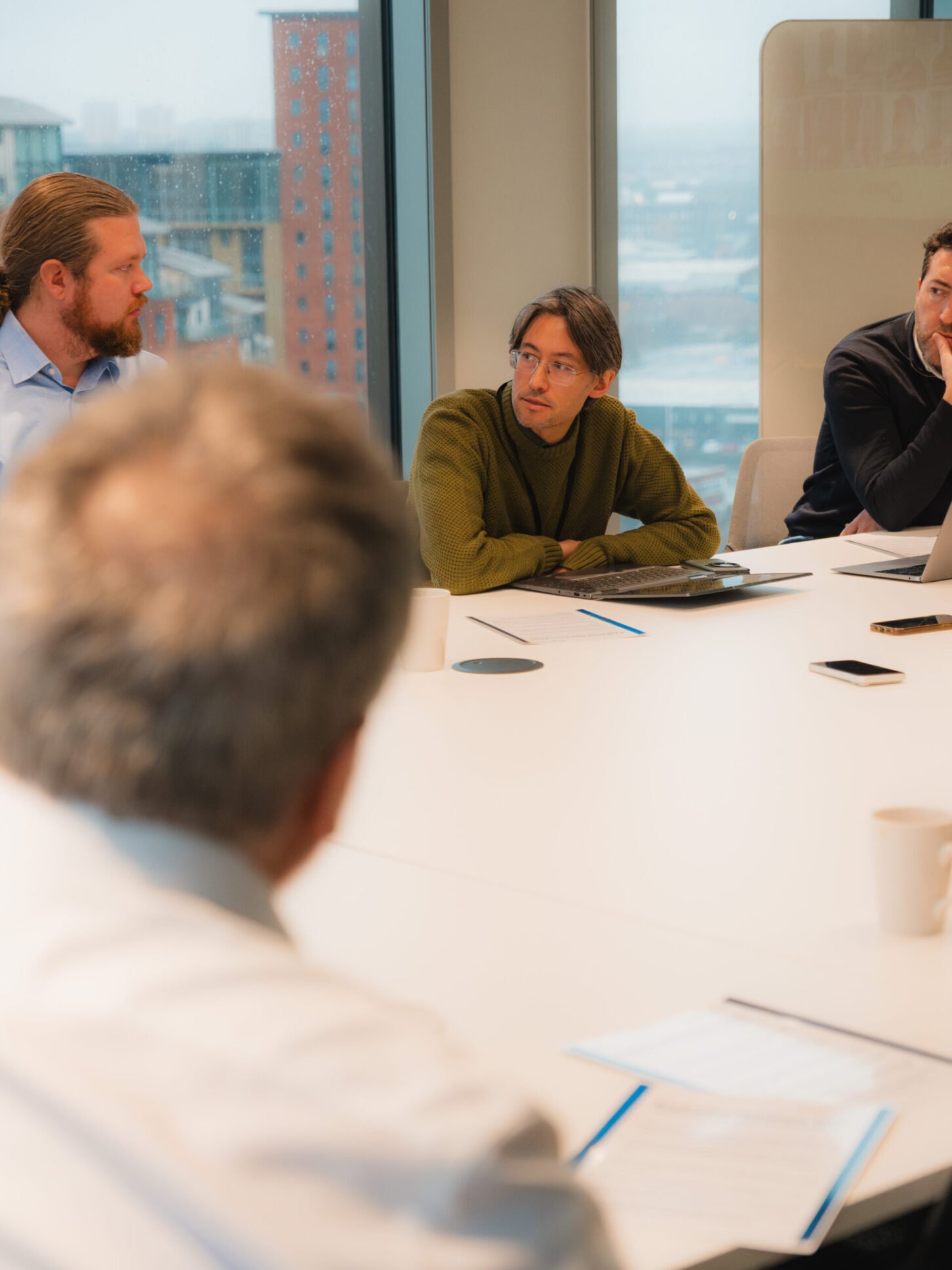
Boswell said universities are central to building sustainable ecosystems but warned that existing funding structures can make collaboration harder than it needs to be.
“Another area that is very difficult, especially in R&D, is actually building that sort of ability,” she said, describing how companies often struggle to access space, permits and funding quickly enough to scale in the UK.
In some cases, she noted, firms end up taking their manufacturing or testing overseas simply because it is faster and easier.
“They are going to the US to build their business and complete testing simply because it is much quicker,” Boswell said.
This dynamic has wider implications for jobs and long-term economic impact. “It leads to the pyramid of jobs,” she added, arguing that losing scale activity to other countries weakens the entire regional economy.
Stifling entrepreneurship
The discussion also highlighted the risk that success itself brings. As Northern cities attract global firms and higher salaries, graduates may be less inclined to start their own businesses.
Several speakers warned that without deliberate support for entrepreneurship, the startup pipeline could thin even as headline investment grows.
Brad Topps, project director at Sister, said that in cities like Manchester, the growing presence of global firms is already changing graduate behaviour. “A lot of the talent coming out of university can now work for an international organisation based in the region,” he said.
“They can work for Disney, Tesla or Uber. They are less likely to do their own thing.”
Reshaping focus
Government policy hovered over much of the conversation.
While attendees acknowledged signs of growing interest in regional innovation, many argued that incremental funding and short-term initiatives are not enough to rebalance a system shaped over decades.
Harris pointed to recent moves to encourage pension funds and national capital to invest more domestically as a potential inflection point but stressed that the impact would depend on execution.
For many around the table, the core frustration was not a lack of ideas or ambition, but a system that still defaults to London-first thinking.
Northern tech, they argued, has already demonstrated resilience and creativity under constraint.
The next phase will depend on whether capital, policy, and institutions are willing to sustain that momentum.
Lloyds is committed to supporting Northern tech businesses as they scale. Get in touch to see how they can help.
Please note that any data sent via e-mail is not secure and could be read by others. Lloyds and Lloyds Bank are trading names of Lloyds Bank plc.
Registered Office: 25 Gresham Street, London EC2V 7HN. Registered in England and Wales no. 2065. Telephone: 0207 626 1500.
Authorised by the Prudential Regulation Authority and regulated by the Financial Conduct Authority and the Prudential Regulation Authority under Registration Number 119278.