

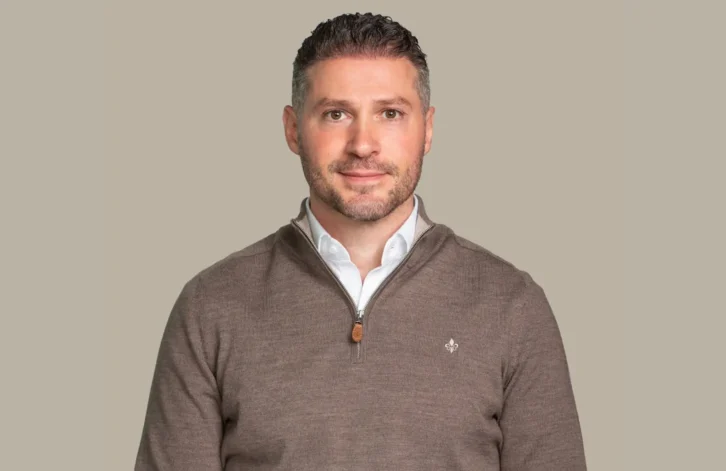
Before founding banking-as-a-service provider OpenPayd in 2018, Dr Ozan Özerk had already co-founded Norwegian social networking site Biip.no, trained and worked as a doctor, and spent years building businesses across different industries.
Looking back, he said there was never a grand strategy behind the career moves. “People sometimes are expecting a super logical journey,” he said. “I just tried to solve my own issues.”
Those issues emerged while running e-commerce businesses, where payments repeatedly became the biggest obstacle to growth.
“When you do e-commerce, payment is one of those really challenging parts of your business,” he said.
“I realised back in Norway, where I was living, that payments are a challenge for e-commerce, so I tried to solve a payment issue for my own businesses.”
“I realised that I’m not the only one struggling and could see that there was a market for it,” he continued.
Today, OpenPayd processes more than $280bn (£209bn) in annual payment volume across Europe and the UK, but Özerk believes the underlying problem remains the same.
“The payment rails of today are not built for the modern era” he said. “You’re building a very modern infrastructure on top of something very old.”
Learning through failure
If there is one theme that runs through Özerk’s career, it is an unusual willingness to embrace failure. Rather than viewing previous ventures, career changes, or setbacks as detours, he sees them as the experiences that made him a better entrepreneur.
“You learn from your mistakes,” he said. “Whether you are with a patient at the hospital, or a failing student, or you have a startup that goes bust – if you are able to learn from it, there is value in your next venture.”
As Özerk put it: ” I don’t judge success by doing everything right. Success for me [is] how you keep failing until you make it work.”
“We grew up in a culture, especially in Europe, where success means being flawless,” he said. “But then you realise that most successful people have had a long path or journey of failure.”
From founder to company builder
As OpenPayd expanded, Özerk found that building a company demanded a different mindset from founding one. In the early days, everyone wore multiple hats. “You’re part-time CFO, part-time CEO – you’re part-time a little bit of everything, because the business is so small,” he said.
“You are not going to be the best person at every position,” he said. “You should start hiring people that are far better than you at every position.”
That outlook ultimately led to Iana Dimitrova being named OpenPayd CEO. Originally hired for her legal and compliance expertise, Özerk credited Dimitrova as an amazing leader who naturally took on broader leadership responsibilities.
“In the beginning, you believe you have taken a step back, but you haven’t,” Özerk admits, recalling how employees initially continued looking to him for decisions, forcing him to break his own habits and redirect them, reinforcing Dimitrova’s authority.
“I had to tell the team to stop reaching out to me for decision-making and I advised Iana to put her foot forward,” he said.
Why OpenPayd stayed bootstrapped
Unlike many fintechs of its generation, OpenPayd never followed the familiar venture capital playbook, a decision shaped by both conviction and experience. Özerk said that in the company’s early days, he never believed investors truly understood the business.
“I didn’t want to have the pressure of having to please someone with money,” he said “[That thinking] gave us a lot of freedom. We could fail on our own and we could fail many times until we succeeded.”
His thinking was also influenced by the sale of his previous social media company. Looking back, he believes outside ownership fundamentally changed what made the business successful.
He continued: “Ultimately, I want the people who will feel the consequences to also have the authority to make the big calls.”
Building what’s next
Although AI dominates today’s technology conversation, Özerk believes the bigger story is how artificial intelligence and agentic payments will modernise payments operations.
“I think the financial services industry will have three pillars moving forward; increasingly, the payment side will happen in the background, more payments will move on to the blockchain, and AI will cater for operational tasks that are currently done manually,” he said.
The bigger question is whether regulation can keep pace. While he supports strong consumer protections, he worries that current UK and European rules are making it difficult for new companies to emerge.
Özerk stresses that regulation is key to unlocking growth for the UK and not acting fast enough means “we will lose out.”
“I don’t feel that the regulation we have in the UK and EU are opening up for innovation,” he said. “The barrier to entry for founders is too high. I hope going forward that we can adapt to the new challenges from a regulatory perspective and open the market for more innovation.
Whether it’s moving from medicine to fintech or choosing to bootstrap rather than raise venture capital, Özerk’s decisions have consistently been driven less by industry convention and more by solving practical problems and a willingness to learn from whatever came next.