

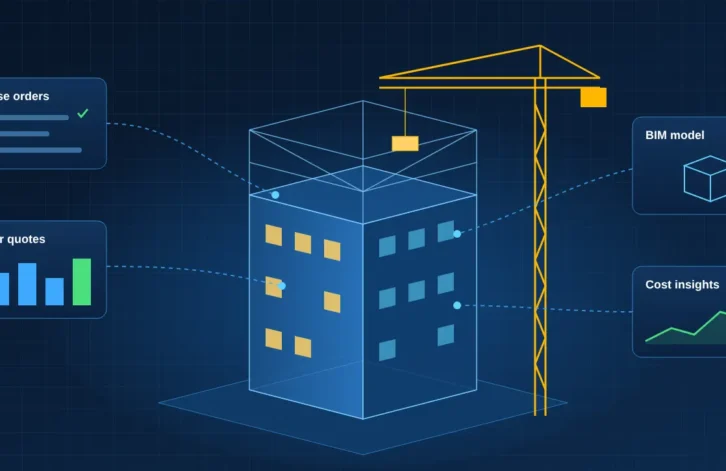
Keeping track of the moving parts of construction procurement is challenging. Digitalising the process and taking advantage of the latest developments in technology is making it much easier to compare, manage and connect contracts, for more straightforward sourcing supporting more successful projects. Discover the ways in which technology can transform your current procurement processes.
Centralising admin
A construction project can generate purchase orders, invoices, quotations, contracts and product information across dozens of suppliers, with individual people and teams responsible for different aspects. When that information is stored in separate spreadsheets and inboxes, simply establishing which order or document is current can eat into working time – let alone handling management.
Digital procurement platforms give you the opportunity to organise activity in one central place. Online systems support electronic bidding and can automate repetitive processes such as requisitions, sourcing, contracts and supplier interactions, until changes are required. In practical terms, a buyer sourcing everyday building materials such as plaster can check product information, compare options and maintain a digital record of the purchasing process rather than piecing together information from separate chains.
Cloud access is key. Your colleagues can access shared procurement documents from different locations, helping office and site teams work seamlessly from the same information. Workers being able to resolve supply queries or check project timelines and labour allocations quickly and directly reduces on-site downtime.
Informing BIM
Around 75% of UK construction companies use Building Information Modelling (BIM), so its usefulness in uniting the disparate elements of project planning and directing each stage of a building’s lifecycle likely won’t be new to you. The Royal Institution of Chartered Surveyors describes BIM and the common data environment as foundations of the construction industry’s wider move towards a model-driven approach to design, delivery and operation.
What’s special is when you take advantage of this technology, so it functions beyond a design tool. Structured project information can and should feed into purchasing decisions. Accurate product and specification data helps project teams coordinate what they intend to buy with what designers have specified. Digital systems make it easier to connect purchasing decisions, rather than treating procurement as a separate administrative exercise.
This makes it easier for teams to spot potential issues earlier. For example, experts within the team can review orders and flag if a proposed product doesn’t align with the latest UK building regulations, giving you the opportunity to investigate and alter orders before materials arrive on site and building begins.
Utilising data
Every procurement cycle creates useful data. You record what products cost, which suppliers you use and what each project requires. Instead of letting that information disappear into completed-project folders, digital tools allow teams to draw on it when planning their next purchases.
The introduction of AI into digital software makes analysis of this information fast and effortless, letting your team focus on what’s most important. This supports customised, hyper-focused plans for every project, ensuring exceptional results for clients every time and helping your company build an unrivalled reputation.
Shaping projects
Technology also gives procurement teams an opportunity to contribute earlier, giving them a role in shaping strategy. When designers, contractors and buyers can work with connected project information, purchasing considerations are included from the start, creating scope for specialists to flag availability, specification or sourcing concerns while teams still have room to respond.
The result changes the buyer’s role in a subtle but important way. Instead of simply sourcing what a project has already decided it needs, you can bring real purchasing information into those decisions, helping to ensure successful, connected collaboration. Technology doesn’t remove the human judgement involved in construction procurement. It gives you better information, earlier, so you can apply that judgement where it makes the greatest difference.