

The United Kingdom has long stood as a global hub for engineering and technological breakthroughs, being among the largest tech sectors in the world. The computer, the World Wide Web, and television all owe part of their development to British inventors. From cutting-edge clean energy solutions to AI-accelerated hardware innovations to aerospace milestones, the country is currently undergoing a significant digital transformation – one that increasingly relies on deeptech.
More specifically, we’re talking about industrial deeptech, a subcategory of the broader deep tech sector that focuses on transforming how physical, heavy industries test prototypes and processes, operate, manufacture, and innovate. To make such transformations possible, modern engineers and researchers are increasingly turning to advanced simulation software, particularly platforms like SIMULIA de Dassault Systèmes, to model, test, and validate their ideas in a risk-free virtual environment before committing time and resources to build a physical product.
Simulation software plays a growing role in the UK’s industrial landscape. But why does this country rely on it so heavily, and how is it putting it to use?
Why simulation is particularly important for the UK’s industrial deeptech sector
A huge part of the UK’s economy relies on industries like aerospace, automotive, energy, advanced manufacturing, defense, and engineering. All these involve complex systems that make even the smallest change in a product’s design highly impactful for the final outcome. But testing every possible configuration in the physical world can be highly expensive, time-consuming, and even difficult to scale, making it an impractical approach. Simulation software can help engineers assess such interactions during the development process and see how a system reacts as a whole, testing ideas against different operating conditions, stress levels, loads, temperatures, and other variables.
The ability to examine multiple scenarios during the design phase is key to making better-informed decisions before any product or infrastructure moves into physical testing.
Eliminating the high cost of trial and error
Building physical prototypes from scratch only to see where adjustments have to be made and where failure can occur can be punishingly expensive. The traditional way of creating a physical model, testing it in the real world, breaking it, and returning to the design phase is economically unsustainable – and it can also introduce huge operational liabilities. Suppose a prototype fails; then that can harm teams, ruin expensive laboratory gear, and create waste, resulting in costs that can bankrupt a business. When an engineering firm or a startup has to spend fortunes to manufacture a single physical prototype, any design flaw can bring about devastating consequences. And hardware for robotics, Internet of Things (IoT), and complex deeptech industries can cost thousands of pounds to develop already during the early development stages, meaning that several missteps can ruin the entire budget and venture.
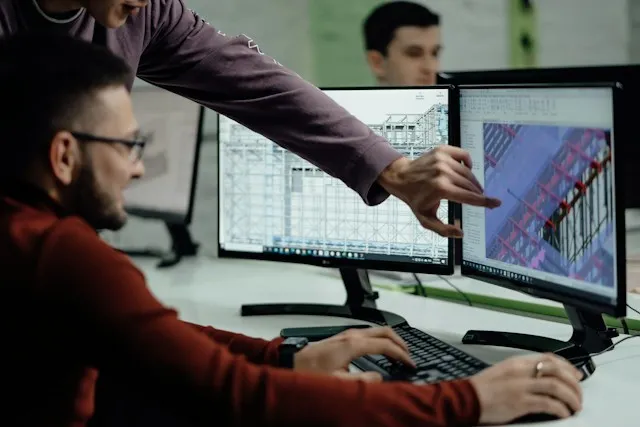
Simulation software eliminates all these challenges and risks by moving the entire prototype testing operation from the physical space to virtual setups. Engineers can test endless different variations of design in a virtual environment, spot weaknesses and flaws on a screen, and observe how a given product or infrastructure would perform under real conditions. This approach helps businesses move to the part where they use physical materials only when they’re certain that the concept is fully validated.
Accelerating time-to-market in a competitive economy
The competition in the tech industry is fierce, meaning that the speed with which a company brings a product to the market makes all the difference. In fast-evolving fields like robotics or smart infrastructure, the first company to deliver a reliable solution is the best positioned to capture the market. Old prototyping methods slow down this process because they imply building physical product parts for any design tweak, which can add months before an actual evaluation of the invention can be done and lead to considerable manufacturing delays.
Virtual simulation changes the script by empowering engineers to simulate thousands of scenarios on a screen in real-time in order to know what works and what needs to be changed, eliminating weeks of waiting and giving the user a considerable competitive advantage.
Meeting the UK’s net-zero targets
The path to a sustainable future for the UK’s deeptech sector boils down to rewriting how hardware is tested and manufactured, from the ground up. As the UK made history as the first major economy to set a legally binding net-zero target achievable by 2050, operators in these industrial sectors face a lot of pressure to cut down on waste and carbon emissions.
Simulation software lets engineers test materials and energy efficiency before building anything – no wasted resources on physical prototypes, as is the case with traditional prototyping that wastes raw materials and resources only to generate iterations that end up in landfills. A product’s carbon footprint can be calculated immediately using the software’s integrated databases, while physics testing helps spot and cut energy and heat waste. This ensures compliance with the UK’s net zero goals from the first sketch.
Where simulation software transforms vital industries
The practical, hands-on advantage of digital modeling is seen in markets where precision is non-negotiable. Today’s simulation platforms reshape several critical domains:
- The healthcare sector. Innovation speed is critical in healthcare, and simulation software helps health experts test medical equipment without risking patients’ safety, discover new medicines faster, and improve clinical trials.
- Transportation and mobility. Engineers can replicate harsh real-world conditions to improve aerodynamics and overall passenger safety before building a single chassis.
- Industrial equipment. Manufacturers can optimise how renewables are integrated into grids by using simulation software to create higher-performance hardware.
- Aerospace and defense. Simulation software can help ensure that aircraft components, from decks to flight dynamics, withstand extreme stress and regulatory hurdles.
- Infrastructure and energy. UK engineers can test and improve green energy grids, clean up polluting factories, build more resilient infrastructures, and more with virtual simulation.
Closing thought
Simulation software solves real-world problems that are so common in traditional modeling – roadblocks that don’t align with a sustainable future where innovation is truly supported and expedited. The future of the UK’s industrial landscape won’t be built on heaps of physical prototypes, but on the precision of virtual testing and optimising.