

At a time of intense geopolitical tension, any reliance on foreign imports exposes a country to some risk.
But as the British government attempts to use advanced technology to lift the country out of its economic slump, its longstanding dependence on overseas suppliers for battery materials could become one of its most dangerous positions.
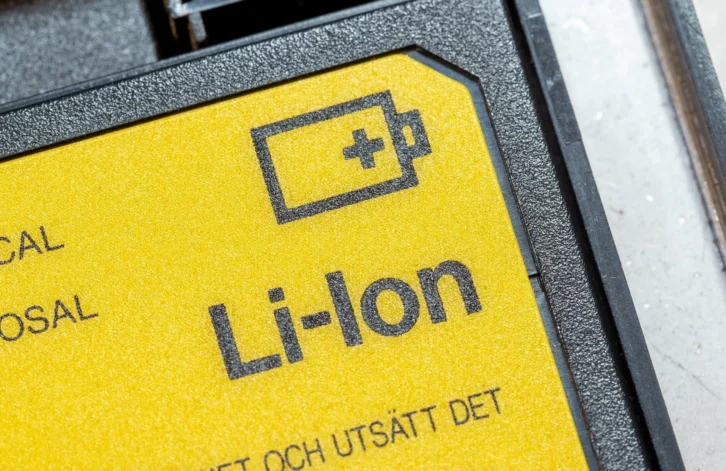
Required for most electronics, EVs and fundamental to the manufacturing industry, a modern economy cannot exist without a reliable supply of batteries and the materials that go into their construction.
The UK in many ways can actually be seen as a global leader when it comes to battery research and manufacturing innovation, but when it comes to sourcing the critical minerals needed to make lithium-ion batteries, it leans heavily on the well-established supply chains in regions like East Asia.
Lithium, nickel and cobalt are all required to keep battery supplies up, and the British government has acknowledged its dependence on these materials in its Critical Minerals Strategy.
This will not stop being the case anytime soon, in fact, research from the European Commission estimated that demand for lithium could surge 20 times by 2040, with similar demand increases for minerals including nickel and graphite.
Despite the clear urgency in securing a reliable supply of these minerals for the future, the UK is almost entirely dependent on international suppliers, with even a short-term delay capable of jeopardising tens of thousands of jobs and slashing production capabilities for electronics, which would be devastating for the automotive industry, among others.
Recycling batteries
For Britain to meet its required supply of critical minerals domestically, it is not feasible to simply increase mining activity, but there are enormous opportunities to develop a more self-reliant ecosystem by scaling domestic battery recycling.
Many of the needed materials can be recovered and reused from existing batteries, which if done at scale could drastically reduce the country’s reliance on international suppliers.
As well as protecting the UK from geopolitical supply-chain shocks, developing a domestic battery recycling industry could also deliver significant economic advantages, with research from UK Battery Strategy claiming that up to 100,000 new jobs could be created by 2040 if the sector was properly supported.
The UK is, however, only at the early stages of having reliable recycling infrastructure that can turn waste back into materials needed for battery supplies.
Data from the European Federation for Transport and Environment has found that the UK and EU recycling capacity is estimated to be only around a tenth of what will be needed by 2030 to meet future end-of-life battery recycling targets, if this continues, most battery waste will still need to go abroad for processing.
So, why has the UK not yet got a developed battery recycling ecosystem?
Something of a pioneer in this field, British company Recyclus recently became the first UK firm to recycle lithium-ion batteries, as reported last year by BBC News, in its LiBatt facility in Wolverhampton.
Recyclus told UKTN that while historically low domestic battery volumes have so far limited the commercial viability of recycling, the situation has been changing rapidly.
Trends like the electrification of the mobility and energy storage industries have meant that the volume of batteries in the UK has surged massively, and as the government mandates a full transition of the auto industry towards EV, this trend will likely continue.
There are other challenges, including regulatory complexity with regards to the classification of lithium-ion batteries as hazardous waste when damaged.
There are planning permission roadblocks to build new specialist recycling facilities, large capital investment requirements, limited infrastructure for the collection of discarded batteries and strict environmental standards for processing battery waste.
But Recyclus has found success recently with its full-service approach.
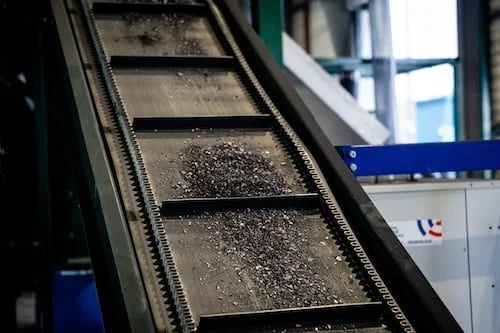
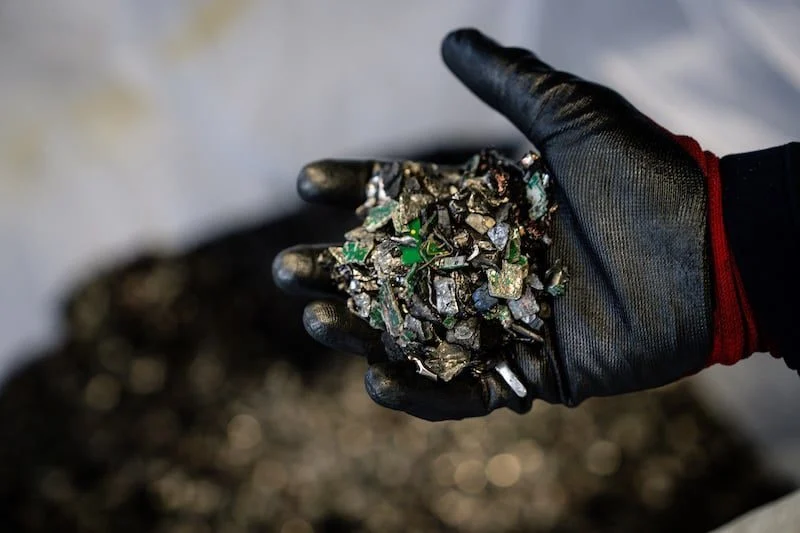
The company handles collection, the process of breaking down batteries into ‘black mass’ and the recovery of critical minerals from the remains that can then be turned into new EV batteries, creating a circular economy approach.
The company believes that as policy, market demand, economics and strategic approach converge, the UK could become a powerhouse of battery recycling.
It described the need for the UK to scale this ability as both a commercial opportunity and, more importantly, a “strategic necessity”.
“As domestic refining capacity expands, more value can be retained within the UK rather than exporting black mass for further processing abroad, strengthening overall supply chain economics,” the company said.
The Department for Food, Environment and Rural Affairs (DEFRA) after a significant period of delay is this year moving forward with the implementation of its reforms to UK e-waste policy.
These reforms will see a much wider availability of battery recycling, including a requirement for local authorities to conduct household collection of e-waste. Retailers will be required to offer free collection for large out-of-use electronics like washing machines and kerbside collection of smaller tech handled by councils is being implemented.
Requirements are also being put on sellers of vape and e-cigarettes to accurately report sales data and cover the cost of specialised recycling for their devices.
So, policy is moving towards a more robust environment for battery recycling, and early pioneers like Recyclus are demonstrating the commercial viability of a circular battery economy.
These are encouraging trends that will need to be backed up by major public and private investment in infrastructure.