

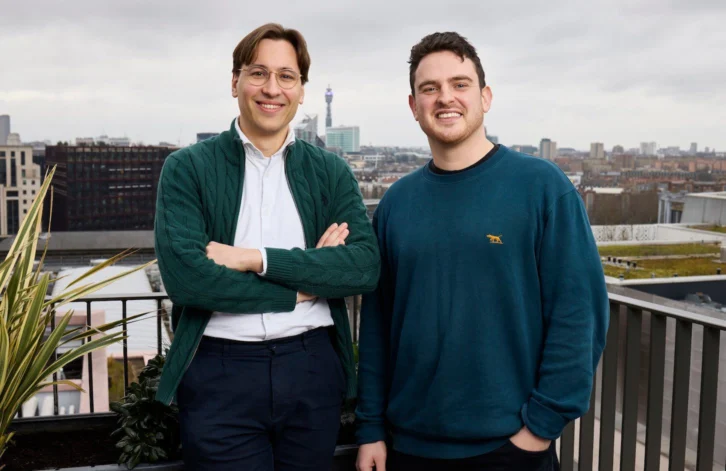
Callosum, a startup founded by Cambridge scientists Danyal Akarca and Jascha Achterberg, has raised $10.25m (£7.5m).
Akarca and Achterberg, who met during their PHDs at Cambridge, founded Callosum to challenge the idea of an AI monoculture.
At the heart of this concept is the idea that scaling a single AI model on identical chips at greater and greater levels will keep control of the technology in the hands of a small group revolving around the likes of OpenAI and NVIDIA.
Looking to tackle this, Callosum is building “systems-level software” that allows different models to work together across different chip architectures.
The company describes its system as extracting performance benefits from different chip architectures and optimising each one for the task at hand. It claims this will support complex real-world tasks that are heterogeneous and therefore require varying capabilities.
“Big labs are currently betting that one model will rule them all. We think that’s wrong and our work proves this,” said Akarca.
“Nature shows that real intelligence emerges from many systems working together. We’ve brought together incredible talent to enable a paradigm shift in how we build intelligent systems to solve real-world problems, with the infrastructure to make that possible, on any chip, anywhere in the world.”
Achterberg added: “Everyone assumed chip diversity was a disadvantage to be managed. We saw the opposite, that it’s an advantage to be exploited.
“We’re not optimising one algorithm on top of the existing stack. We’re using software to control all the levers across the entire system, extracting benefits from diversity that others dismiss. Plural understands this mission and we’re excited to build alongside them.”
Plural led the investment, supported by the Advanced Research and Invention Agency (ARIA) and angel invetors.
“[Callosum’s] vision for a multi-model, multi-chip future could be transformative and positions them to compete with the world’s biggest chip and model makers,” said Plural partner Ian Hogarth.
“These are serious founders tackling a serious mission, which is exactly what we look for at Plural.”