

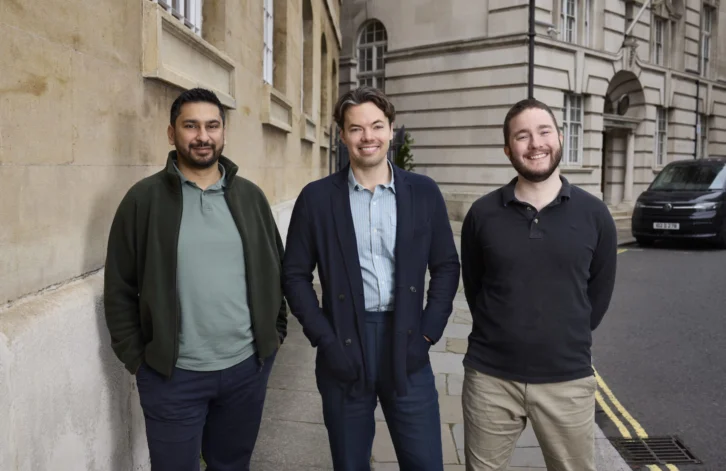
Augur, a defence-focused AI startup has secured a $15m (£11.2m) investment round.
The Augur platform was created in 2024 to meet the evolving threats of the modern geopolitical landscape, with its founders identifying that legacy camera and sensor systems protecting critical infrastructure now offer limited value.
The platform integrates with existing cameras and sensors deployed across transport hubs, critical energy infrastructure, stadiums, labs, innovation hubs and other sensitive sites.
The AI model is then used to detect abnormal behaviours, track unfolding incidents and reconstruct events in seconds.
“The nature of threats facing public spaces and critical infrastructure has changed. Incidents are faster, more dispersed and often designed to exploit gaps,” said Harry Mead, co-founder and chief executive of Augur.
“Augur exists to close those gaps, helping operators spot warning signs earlier and make better use of their existing infrastructure. Our goal is simple: to help protect people in the places where they live, travel and gather.”
The London-based company said its model does not rely on facial recognition technology, instead offering anonymised behavioural and movement pattern tracking to provide additional security in sensitive areas without infringing on personal privacy.
The investment round was led by Plural, with participation from First Kind, SNR, Flix and Tiny VC.
“When it comes to protecting our people and critical infrastructure, we cannot afford to be as complacent and naive as we were in protecting Ukraine,” said Plural partner Khaled Helioui.
“The new focus on grey zone warfare and domestic sabotage is not a threat we are currently equipped to contain. Protecting our critical infrastructure is one of the defining challenges of this generation.
“The Augur team leverages a unique combination of deep field experience and technological innovation to deal with some of the most serious threats we have encountered as a society and a clear sense of responsibility not to lose our democratic values in the process.”