

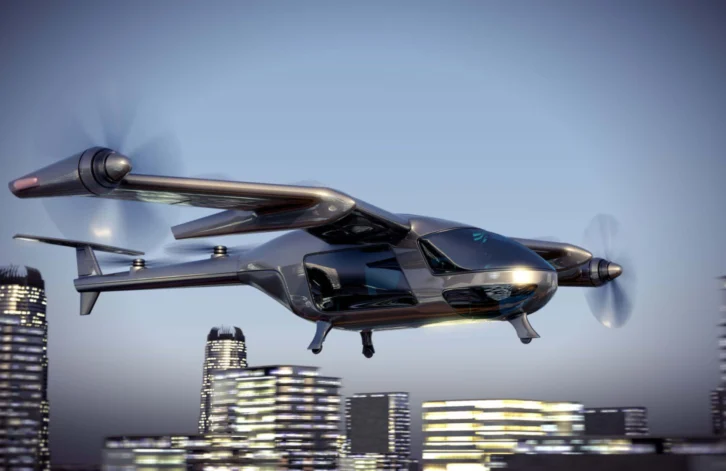
The UK government has committed £46.5m to the drone and advanced air mobility sector, helping drone deliveries, flying taxis and smarter emergency services become a reality in the UK’s skies.
Part of the investment will also see a crackdown on “faceless” drones, which can be used in suspicious or illegal activity, through a bespoke drone identification system.
Hybrid Remote ID works by sending out the drone’s ID and location during flight so nearby devices can pick it up, sharing flight details through a secure online system that authorised people can access even when they’re not nearby and recording historic data. Nearly £20.5m has been committed to develop the tech.
Delivered through the Civil Aviation Authority (CAA), the funding also includes £26.5m to cut red tape and support the regulatory, digital and security foundations needed to bring drones and advanced air mobility – such as electric flying taxis – into more routine use across the UK.
This includes speeding up approvals for drone operations for emergency responses, medical logistics and infrastructure inspection, driving forward regulation to get flying taxis in the sky from 2028.
Drone operators will also benefit from a streamlined digital application process, reducing the time required to navigate regulation and prepare applications.
“We’re backing the next generation of British aviation innovators with nearly £50m to drive drone regulation reforms and unlock barriers to growth that will create jobs, lower emissions and further the UK’s world-leading aviation reputation,” says Keir Mather, aviation, maritime and decarbonisation minister.
“Innovation must go hand in hand with strong security – that’s why over half of our investment will develop a new ID system to track drones in real-time, supporting emergency services and building public confidence in an industry that could be worth up to £103bn by 2050.”
Earlier this year, the NHS expanded its use of drones by transporting urgent pathology samples across south west London using the technology.